
Arrest Warrants in Lincoln County
An arrest warrant is a judge's permission for an officer to take someone into custody and bring that person before the court. Lincoln County's trial court is the Minnesota District Court. The court sits in the Fifth Judicial District. It hears criminal, traffic, juvenile, civil, family, probate, and conciliation matters. A warrant is not the default outcome. The criminal rules presume a summons in many situations. A summons must be used for an offense punishable only by a fine in misdemeanor cases. A judge signs a warrant only when the rule's criteria support an arrest. That choice decides what happens next. A person either receives a paper command to appear or a knock at the door.
Probable Cause Behind a Lincoln County Warrant
Minnesota Rule of Criminal Procedure 3 governs the whole sequence. A Lincoln County complaint must establish probable cause, through its supporting documents or sworn testimony. The judge needs reason to believe an offense happened and that the defendant committed it. Only then is process issued.
- The prosecutor presents a complaint with supporting documents or sworn testimony.
- The judge reviews the facts for probable cause on the offense and on the person.
- The judge chooses a summons or a warrant under the rule and the circumstances of the case.
- If a warrant issues, the judge signs it and sets bail or release conditions.
- The warrant goes to an officer authorized by law for execution.
- At arrest, the officer tells the person that a warrant exists and states the charge.
What a Lincoln County Arrest Warrant Contains
The rule fixes the required contents of a Lincoln County warrant. The case file carries them. Knowing the field names lets you ask precise questions at the counter instead of describing the situation from memory.
| Issuing court | Lincoln County District Court, Fifth Judicial District |
|---|---|
| Case number | Court file identifier, shown in the pattern NN-CR-YY-NNNN |
| Defendant identification | Name or a description sufficient to identify the person |
| Offense | The charge and its statutory classification |
| Signed by | The district court judge who issued the warrant |
| Bail and conditions | The release terms stated on the warrant |
| Appearance instruction | The direction to bring the person before the issuing court |
| Serving agency | Sheriff, Tyler Police, or another authorized officer |
| Service record | Execution date and custody location where public |
| Incident number | Law-enforcement identifier attached to an arrest |
The criminal rule that governs issuance is the source for each required item above.
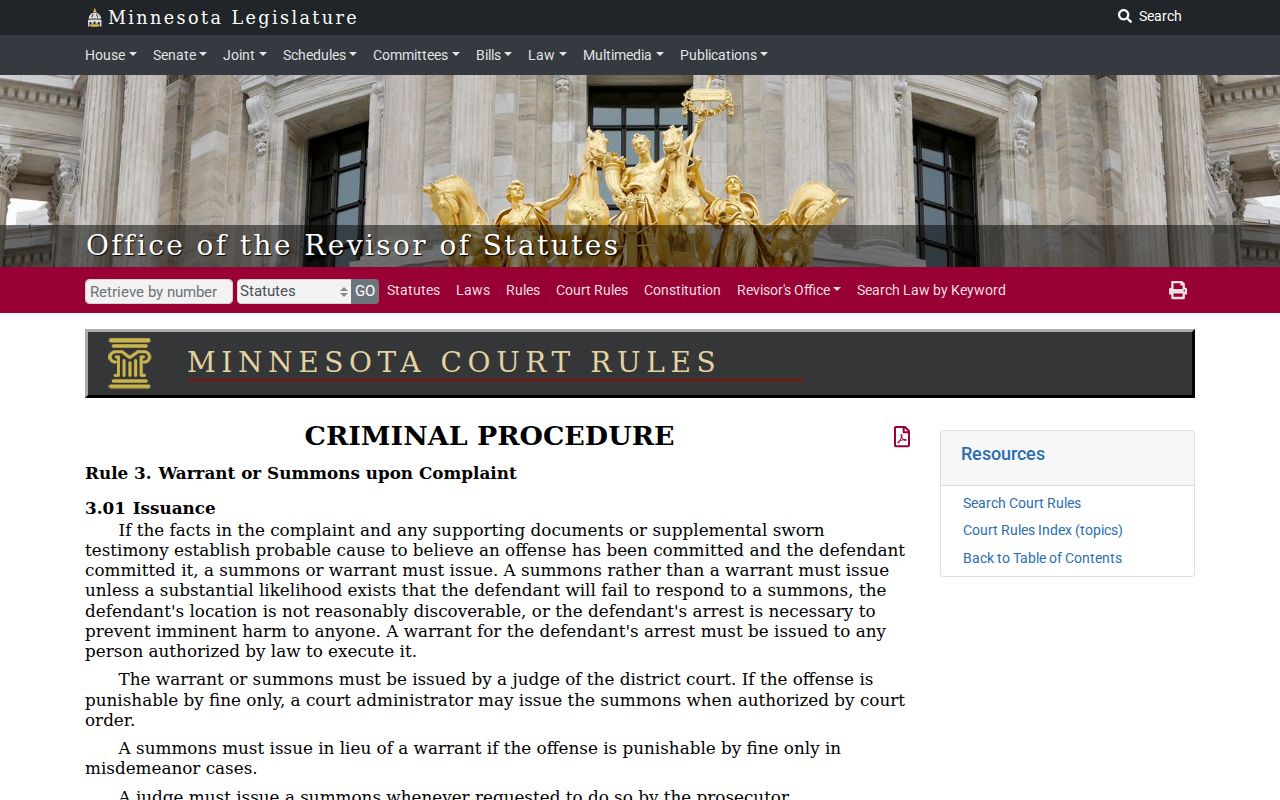
Read the rule's headings on issuance, contents, execution, and service before calling about a Lincoln County warrant. Each heading answers a different counter question.
The Lincoln County Arrest Warrant Timeline
An arrest is not the end of the warrant. It directs that the person be brought promptly before the issuing court. When court is not in session, the rule sets a without-unnecessary-delay standard. It also sets a 36-hour framework, subject to the availability of a judge. No number is a promise. The rule binds the officers and the court, not the person's schedule. In Lincoln County, the first appearance is where release conditions, counsel, and the next date get set. A bail amount cannot be inferred from a fine, a jail capacity, or a charge. The judge sets it. The warrant or the first appearance records it.
How Lincoln County Arrest Warrants Are Served
Any officer authorized by law may execute a Lincoln County arrest warrant. It can be executed anywhere in Minnesota, except where the law prohibits it. The officer need not hold the paper at the arrest. The person must be told a warrant exists. The charge must be stated too. Minnesota's arrest statutes, including Minn. Stat. § 629.30, describe the authority behind an arrest. They do not establish that a particular warrant exists. The sheriff is the countywide agency for service, custody, and the jail. Tyler Police serve city matters in Tyler. Lake Benton's public-safety page assigns city-limit law enforcement to the sheriff. A regional government source describes Ivanhoe's sheriff contract. Historical agreements can change, so a citation from an older case may not match today's agency route. Confirm the serving agency with the Lincoln County court or the sheriff before assuming anything.
Arrest Data Fields Under Minnesota Law
Minn. Stat. § 13.82, subd. 2 spells out what a public adult arrest record may contain in Lincoln County: the time, date, and place of arrest, whether force, pursuit, or weapons were involved, the charge and its legal basis, the agencies and personnel involved, custody location, transfer and release information, adult identity descriptors, recording systems with an investigative exception, the source of the information, and an incident number. An arrest report and a warrant index are different records, though. Subdivision 19 keeps warrant-index data confidential until custody, service, or appearance, so the report of a Lincoln County arrest can be public while the index that prompted officers stays closed. If a request is denied, ask for the specific classification authority in writing. The law-enforcement data statute shows both the public arrest fields and the separate index classification in one place.
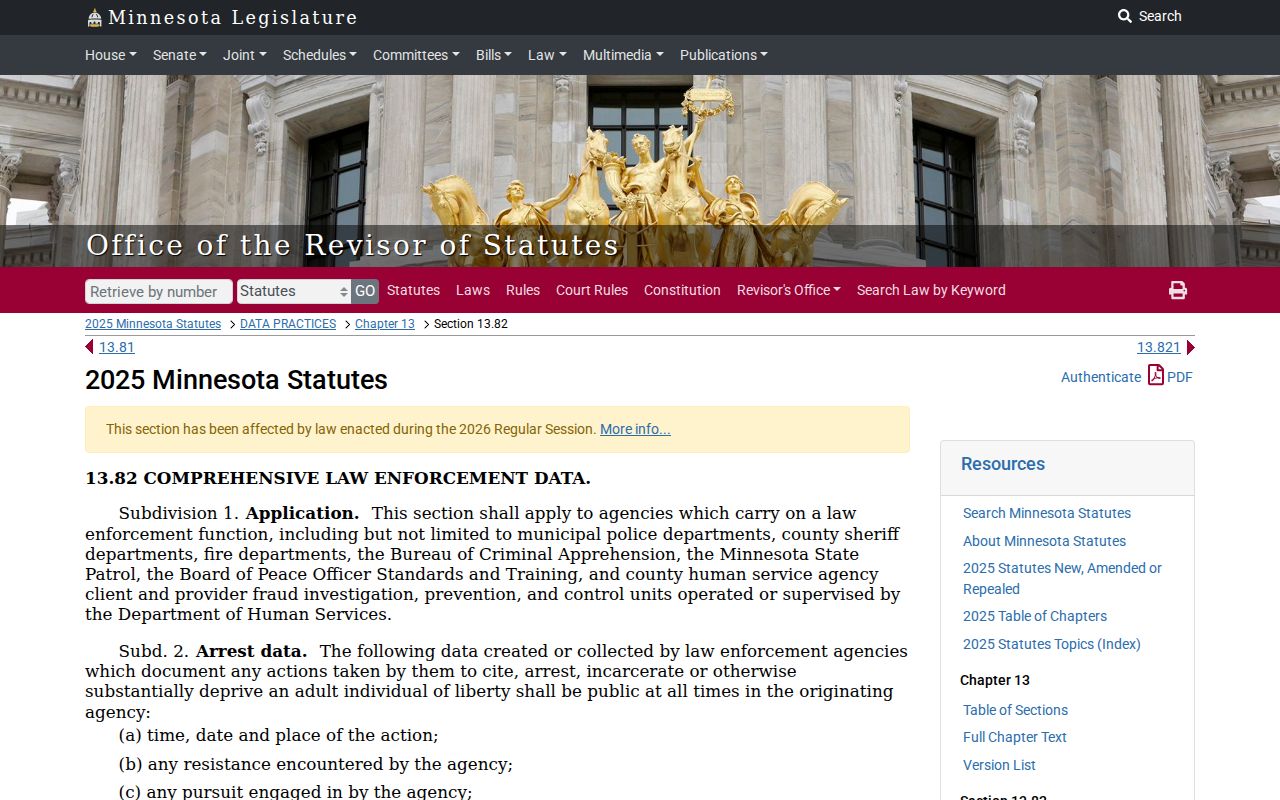
The confidentiality provision names three events: custody, service, and appearance. A Lincoln County release decision belongs to the agency.
Arrest Warrant vs Summons vs Bench Warrant
Lincoln County uses three forms of process, and the table separates them by what each one authorizes.
| Process | What It Authorizes | How It Arises |
|---|---|---|
| Summons | A court appearance, without immediate arrest | A complaint and probable cause where the rule prefers a summons |
| Arrest warrant | Taking the person into custody and bringing them before the court | A complaint and probable cause where the rule's criteria support a warrant |
| Bench warrant | Enforcement of a court obligation in an open case | A missed appearance, order, or release condition |
Note: A bench warrant assumes a Lincoln County case is already open, while an arrest warrant usually starts a new one.
Search Warrants and Lincoln County Arrest Warrants
A search warrant and an arrest warrant do different jobs. The first lets officers search a place or seize items. It does not authorize taking a named person into custody. Minnesota keeps an annual table of administrative file numbers for criminal search-warrant public files, and Lincoln County shows up there. Treat that table as an index for records work, not a warrant lookup for people. The annual search-warrant file table can point you to a file, but it will not tell you who is wanted. If a public case file mentions a warrant, ask which kind it is. A search warrant says nothing about an arrest.
What to Do If There's a Warrant for You
Do not approach anyone named in a record to settle the question. Give Court Administration your case number and ask about your own status. Then ask Lincoln County authorities how a surrender works.
Important: Talk to an attorney before you turn yourself in, and never act on an unsolicited call or message that demands payment to clear a warrant.
Facing a Lincoln County warrant, you have a few workable options. You can appear in court, schedule a surrender at the Law Enforcement Center, post bail, or file a motion asking the judge to recall or quash the warrant. Ask the court which path fits your case. Get the instructions in writing, too. If the person is outside Minnesota, ask the issuing court whether an out-of-state or extradition issue exists, because the county page does not answer that question. Before you go anywhere, call ahead. Note: Call the Law Enforcement Center at 507-694-1664 first, and ask how booking and release work there.
Federal Warrants Do Not Appear in State Records
Federal warrants live in a separate system. Lincoln County sits in the federal District of Minnesota, though no federal courthouse is located in the county. Federal warrants come out of federal proceedings, so a county case system search, the sheriff's page, and a state data request will not reach them. The District of Minnesota lists clerk's office locations in Minneapolis, St. Paul, Duluth, and Fergus Falls. For federal docket records, use PACER. CourtListener offers a free alternative for federal dockets and case law, and the U.S. Marshals Service serves federal judicial process.
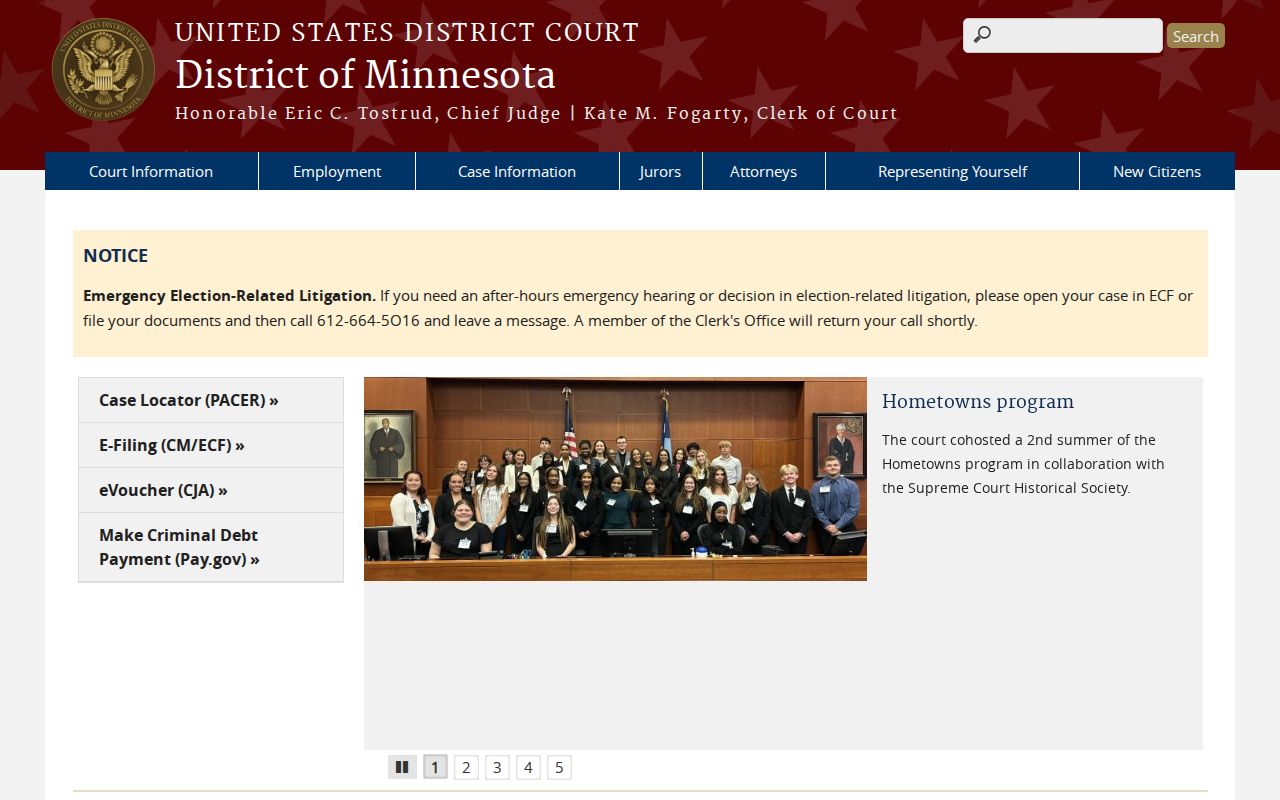
A Minnesota state case can reference a federal matter without being the federal record. Verify a federal warrant only with the federal court or an attorney, not through Lincoln County sources.